
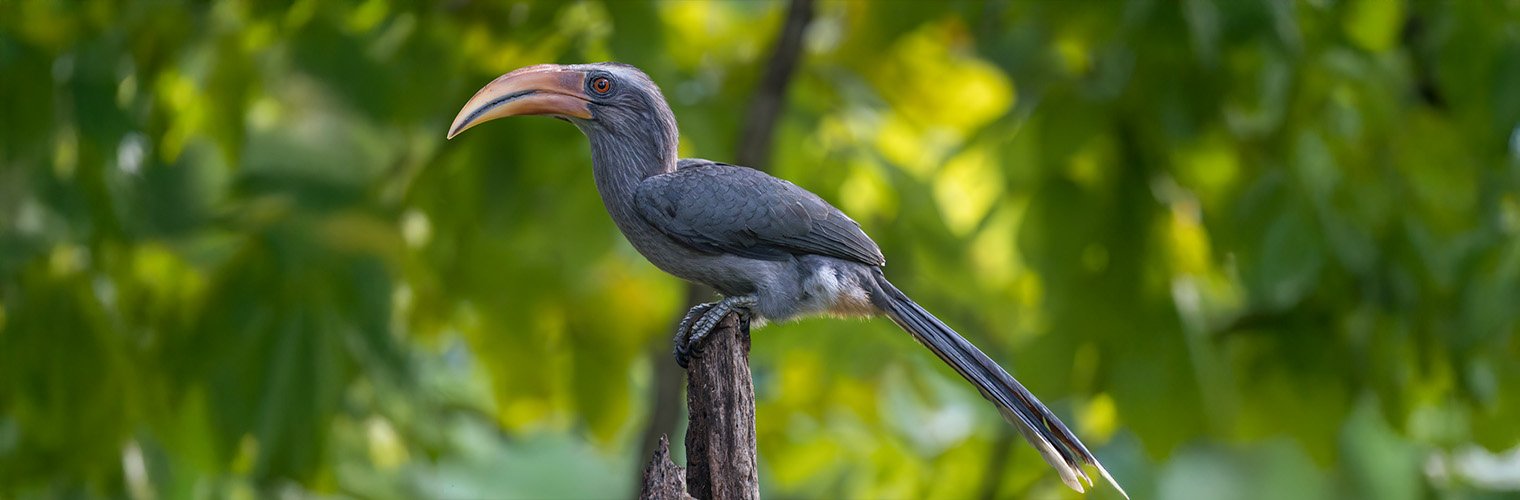
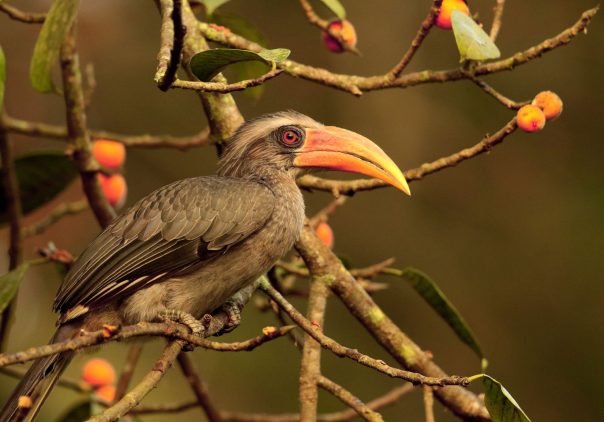
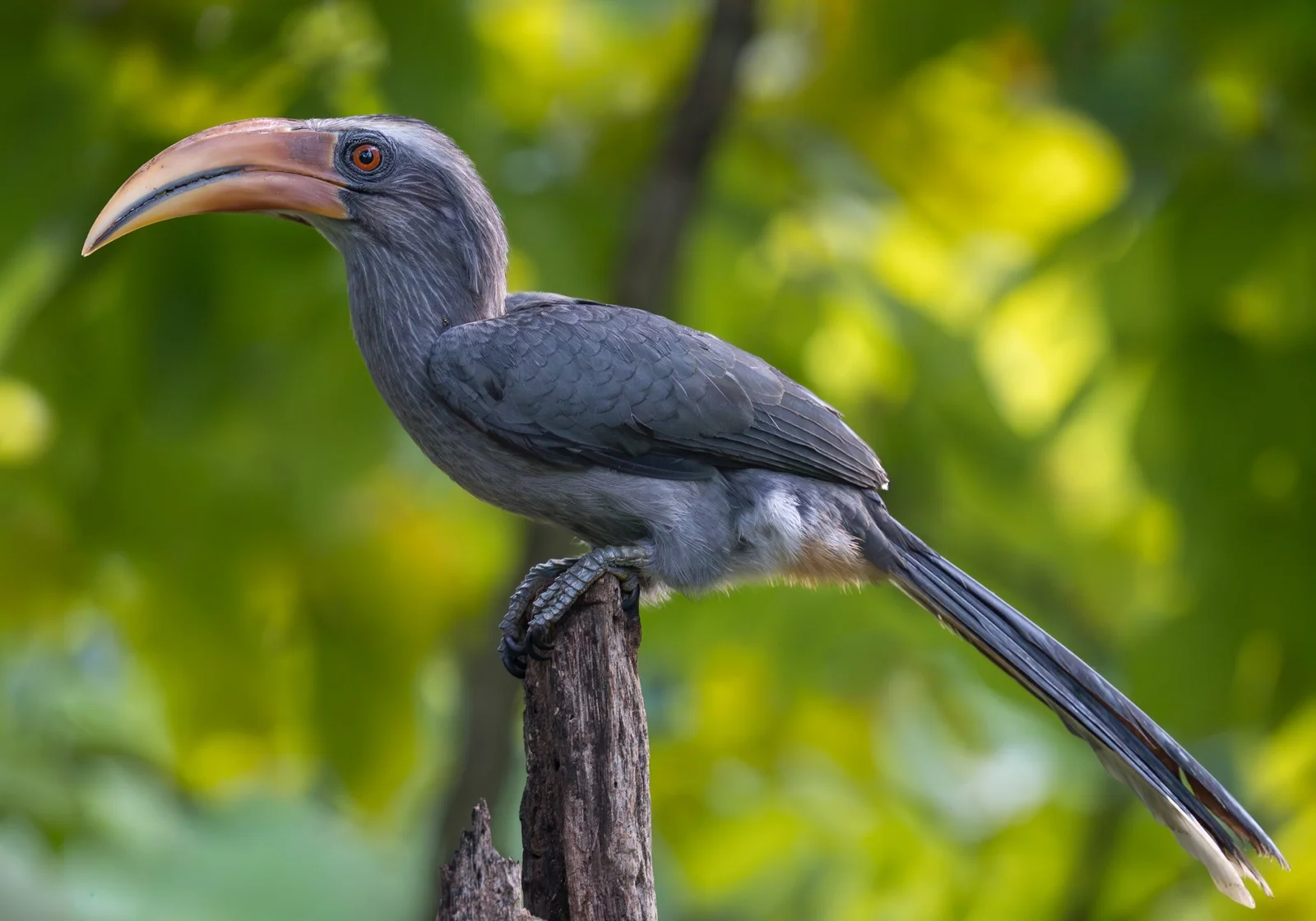
In Kerala, local myths weave a tragic story around the hornbill (known as Vezhambal). Legend says the bird is condemned to a relentless thirst and cannot drink water from the ground. Instead, it must wait for the monsoon, holding its head toward the sky to catch the first falling drops. While science shows they actually get moisture from fruit, this folklore has made the bird a powerful symbol of endless waiting and the harbinger of rain.
The “Farmer of the Forest” Narrative
Known as “Nature’s Gardeners,” Malabar Grey Hornbills are credited with planting the very forests they live in.
Seed Dispersal: They consume large forest fruits whole and fly long distances before regurgitating or defecating the seeds.
Forest Growth: Because they can eat larger seeds than smaller birds, they are responsible for the propagation of diverse, large-seeded trees that would otherwise fail to spread.
The most famous “story” of the Malabar Grey Hornbill is its remarkable nesting ritual, often compared to the dedication of a monk or tapaswi.
Self-Imprisonment: The female finds a tree cavity and seals herself inside using a “cement” made of her own droppings and fruit pulp, leaving only a tiny slit.
Absolute Trust: For about 80–90 days, she remains in the dark, molting her feathers and becoming flightless while she cares for her eggs.
The Provider: The male becomes the sole provider, flying back and forth to deliver thousands of food parcels through the narrow slit. If the male were to die during this period, the mother and chicks would starve, trapped inside their fortress.
The “Gossipy Aunt”: Due to their loud, hysterical cackling and manic laughing calls, locals often playfully compare them to a busybody aunt who always has something to say.
Symbols of Family: They are seen as icons of monogamy and family ties, as pairs often return to the exact same nesting tree for over 25 years.